[Case Study] XH-M350G-2HR: Third-Generation Green-Laser Metal Additive Manufacturing System
XH-M350G-2HR: Third-Generation Green-Laser Metal Additive Manufacturing System
Three upgrades for stable pure-copper production: build efficiency, operational stability and full-build-plate consistency.
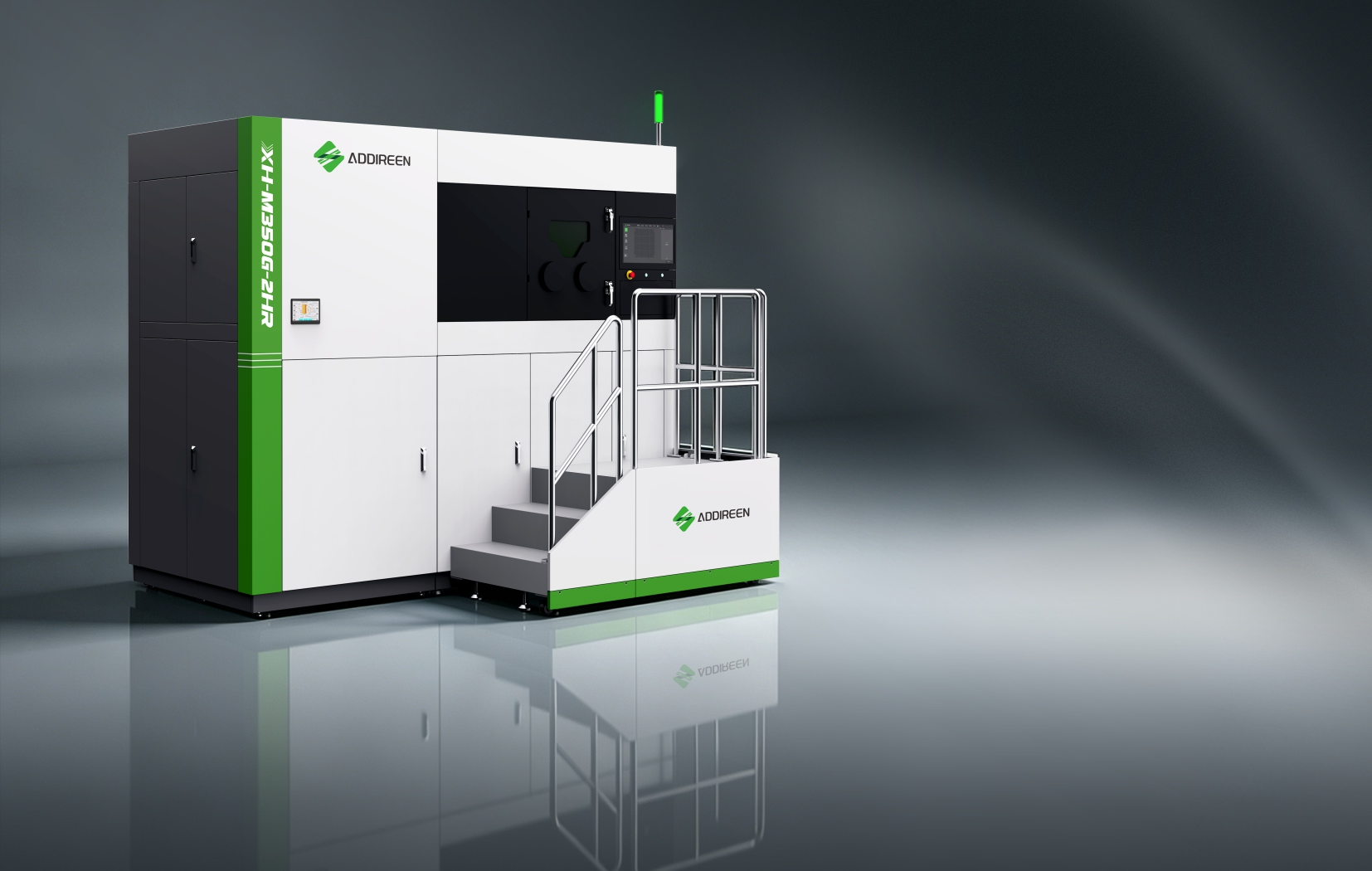
XH-M350G-2HR: Third-Generation Green-Laser Metal Additive Manufacturing System
The third-generation XH-M350G-2HR focuses on three production requirements: improving build and auxiliary-process efficiency, supporting stable continuous printing, and maintaining consistency across full-build-plate, multi-part layouts.
The system has a build volume of 350 × 350 × 550 mm, including the build plate. It comes standard with two 500 W green lasers, with a dual 1,000 W configuration also available.
Product details and technical enquiries: XH-M350G-2HR Product Page
Overview of the Three Upgrades
|
Production Focus |
Main Changes |
Data |
|
Higher Efficiency |
Coordinated dual-green-laser processing, bidirectional variable-speed recoating, rapid chamber purging and long-life filtration |
Build rate up to 24.24 cm³/h at a 40 μm layer thickness |
|
Operational Stability |
High-rigidity motion structure, temperature-controlled optics, a uniform airflow system with two supply and two extraction paths, and independent recirculating filtration |
Build-area airflow coefficient of variation reduced to 3%; protective window remains clean for over 360 hours |
|
Full-Build-Plate Consistency |
Closed-loop motion control, powder-bed inspection, full-process monitoring and traceability of key process data |
Within-build dimensional consistency: Cpk > 1.33 |
1. Production Efficiency
The XH-M350G-2HR uses two green lasers for coordinated processing. Pure copper absorbs 532 nm green laser at approximately eight times the rate of commonly used near-infrared wavelengths, helping establish a suitable process window for pure copper and copper alloys. The system is available with two 500 W or two 1,000 W green lasers. Layer thickness, scan strategy and build layout can be adjusted to meet the efficiency and quality requirements of different parts.
Addireen uses a 40 μm layer process to demonstrate the system’s pure-copper build efficiency. Under the specified parameters and test conditions, the build rate reaches up to 24.24 cm³/h. Actual output varies with part geometry, scan path, packing density, recoating time and acceptance requirements.
|
Upgrade |
Internal Comparison |
Production Impact |
|
Bidirectional Variable-Speed Recoating |
Recoating efficiency increased by 48% |
Reduces non-exposure time per layer |
|
Higher-Power, Thicker-Layer Process |
Build efficiency increased by over 50% |
Increases build volume per unit of time |
|
Updated Purging Logic and Chamber Sealing |
Purging efficiency increased by 63% |
Reduces pre-build preparation time |
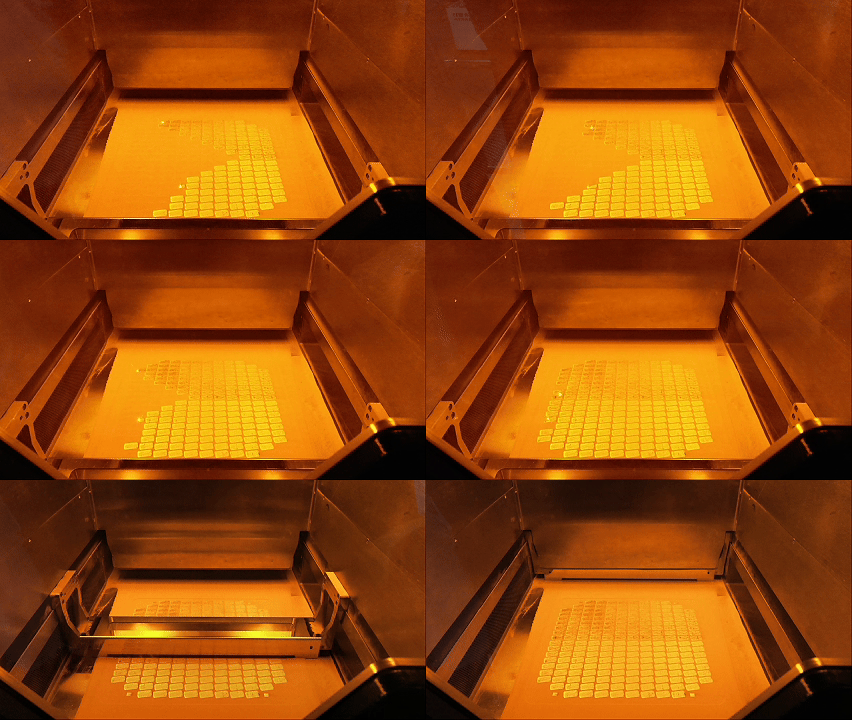
Multi-part printing across the full build plate
2. Operational Stability During Long Builds
The XH-M350G series has accumulated more than 100,000 hours of printing. Long builds place sustained demands on the motion, optical and airflow systems.
The XH-M350G-2HR uses a high-rigidity four-guide-rail structure, together with linear-scale feedback and closed-loop servo control, to maintain motion accuracy. Active temperature control reduces thermal drift in the optical system during extended operation.
A multi-layer airflow system manages smoke and spatter around the powder bed and protective window. Combined with independent recirculating filtration and optimized chamber airflow, it reduces particle accumulation inside the build chamber and limits the effect of window contamination on continuous printing.
Optical Path and Layered Airflow
The optical path and key optical components have been updated. Water cooling regulates the temperature of these components, helping maintain optical stability during printing and across the full build area.
The airflow system is divided into upper and lower layers. The lower airflow passes across the powder bed and laser-scanning area to remove smoke and spatter. The upper airflow helps prevent escaped particles from accumulating around the protective window. Independent recirculating filtration and optimized chamber airflow further reduce smoke residue and support longer continuous builds.
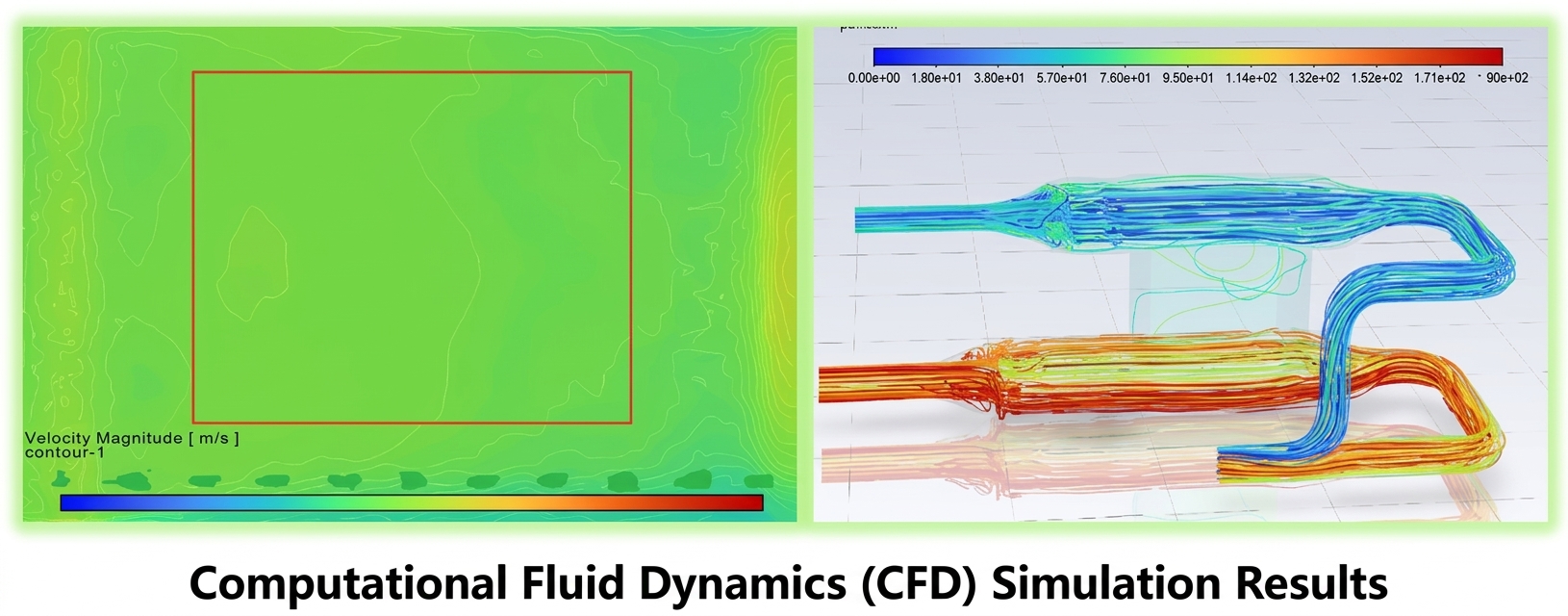
Layered airflow simulation of the build chamber, showing airflow velocity distribution across the build area and the upper and lower flow paths.
Results related to the airflow, protective window and laser system include:
- Protective-window cleanliness maintained for over 360 hours.
- Build-area airflow coefficient of variation reduced to 3%.
3. Full-Build-Plate Printing and Batch Consistency
The 350 × 350 mm build area supports multi-part production in a single build. Full-build-plate layouts can increase the effect of regional differences in motion, recoating and airflow. To manage these variables, the system combines closed-loop precision motion control, powder-layer inspection and full-process monitoring.
Closed-Loop Motion, Recoating and Monitoring
Batch production requires both process consistency and quality traceability. The XH-M350G-2HR applies closed-loop control across motion, recoating and monitoring to maintain a consistent focal plane and powder-layer thickness throughout the build. This approach focuses on powder-layer quality before exposure, helping maintain stable laser melting conditions from layer to layer.
The system also records key process data, including laser power and oxygen concentration in the build chamber. These records support parameter control, process repeatability and quality traceability.
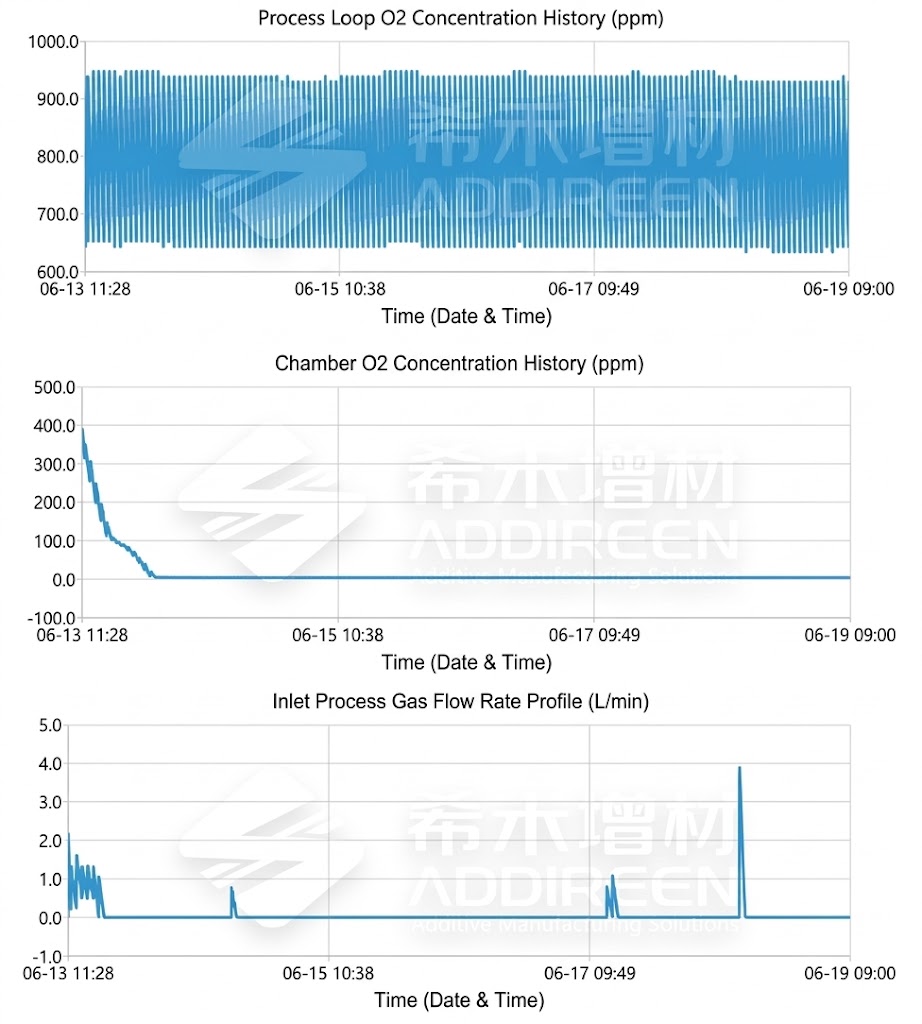
Oxygen Concentration in the Recirculation SystemBuild-Chamber Oxygen Concentration and Inlet Gas Flow Records
Full-Build-Plate Production of Approximately 400 Pure-Copper Optical Transceiver Heat Sinks
Approximately 400 pure-copper heat sinks for optical transceivers were produced in a build lasting about 140 hours. The parts were arranged across the full build plate and contain closely spaced thin walls and fins, with local wall thicknesses below 0.5 mm.
This was the industry’s first full-build-plate production batch of pure-copper optical transceiver components. Manufacturing each part as a single piece reduces separately produced sections and welded interfaces.
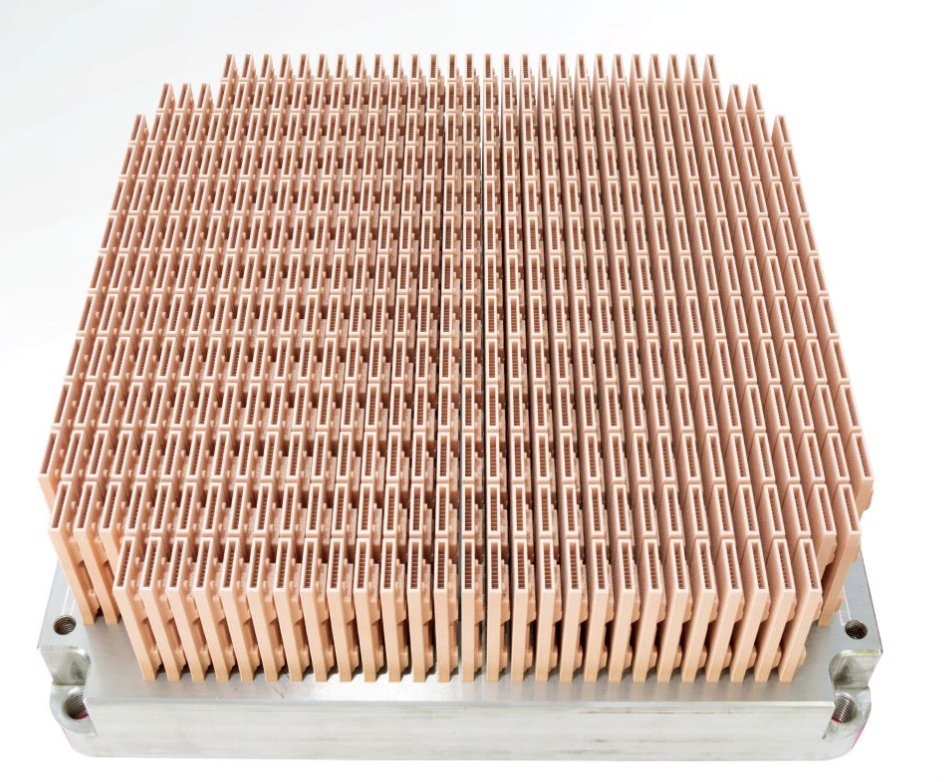
Full-build-plate production of approximately 400 pure-copper optical transceiver heat sinks
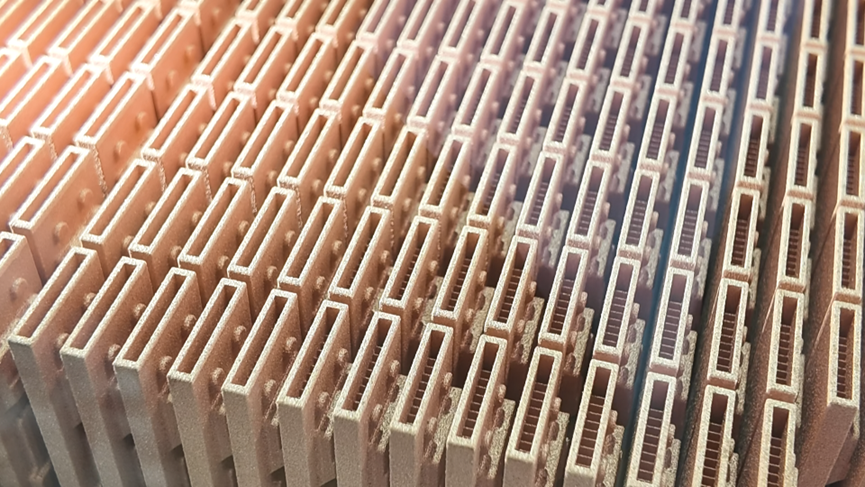
Close-up of the thin-wall and fin features in the full-build-plate production batch
Pure-Copper Process Data
Under the specified process conditions, the XH-M350G-2HR achieved relative density up to 99.9%, thermal conductivity up to 400 W/(m·K), and electrical conductivity up to 101% IACS.
Final results depend on powder condition, part orientation, feature size and process parameters. Project acceptance should be based on the actual parts and test methods agreed by both parties.
|
Item |
Data |
|
Pure-Copper Build Rate |
Up to 24.24 cm³/h at 40 μm |
|
Relative Density |
Up to 99.9% |
|
Thermal Conductivity |
Up to 400 W/(m·K) |
|
Electrical Conductivity |
Up to 101% IACS |
|
Developed Layer Thicknesses |
30 μm, 40 μm and 80 μm |
Main System Specifications
|
Parameter |
Specification |
|
Build Volume |
350 × 350 × 550 mm, including the build plate |
|
Green Lasers |
2 × 500 W standard; 2 × 1,000 W optional |
|
Focused Spot Diameter |
40–60 μm |
|
Scanning Speed |
Up to 8 m/s |
|
Layer Thickness Range |
20–120 μm |
|
System Dimensions |
3,400 × 1,450 × 2,850 mm (L × W × H) |
|
System Weight |
Approximately 4 t |
|
Supported Materials |
Pure copper, CuCrZr, AlSi10Mg, 316L stainless steel, Ti6Al4V and other evaluated materials |
Applications in Thermal Management and High-Conductivity Components
Typical applications include liquid cold plates, heat exchangers, optical transceiver heat sinks, induction coils and aerospace combustion chambers.
Liquid Cold Plate
Material: Pure copper
Applications: Cooling for AI servers, power electronics and high-heat-flux chips
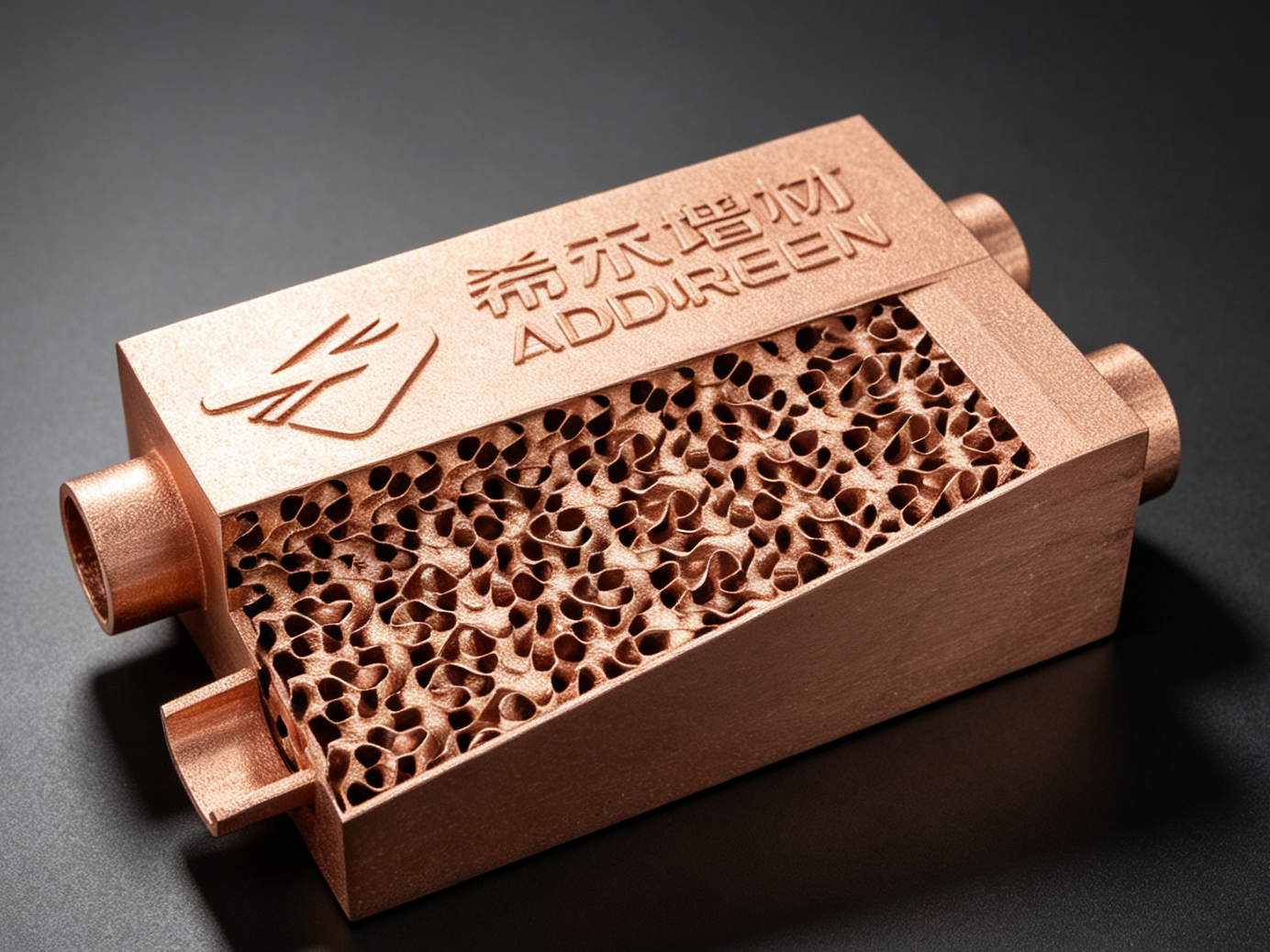
Heat Exchanger
Material: Pure copper
Applications: High-power modules in new energy vehicles, power electronics, complex flow channels and lightweight heat exchanger structures
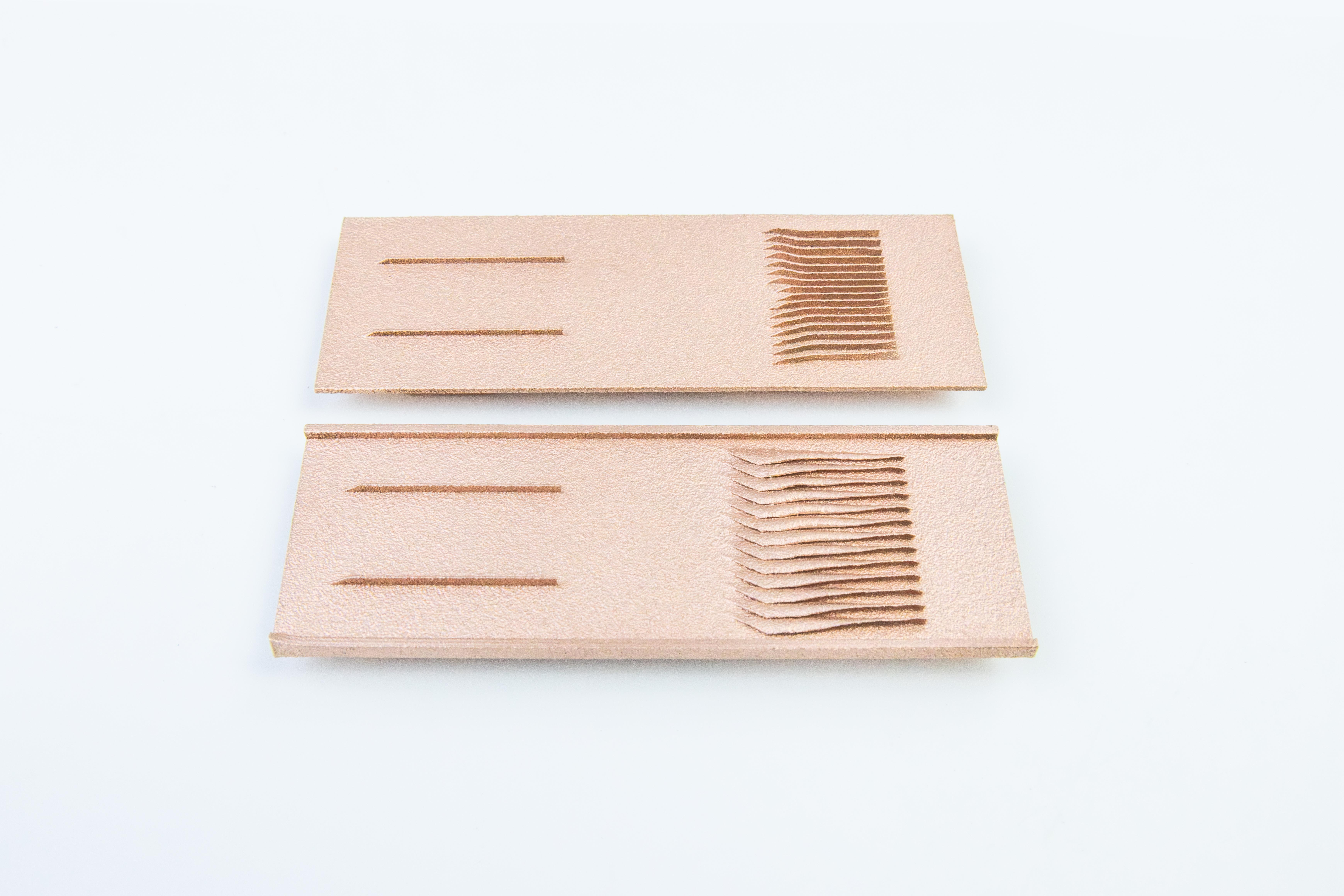
Optical Transceiver Heat Sink
Material: Pure copper
Applications: High-speed communications and precision thermal management
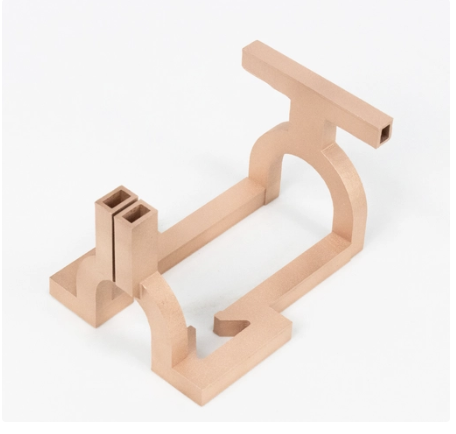
Induction Coil
Material: Pure copper
Applications: High electrical conductivity, one-piece construction and complex coil geometries
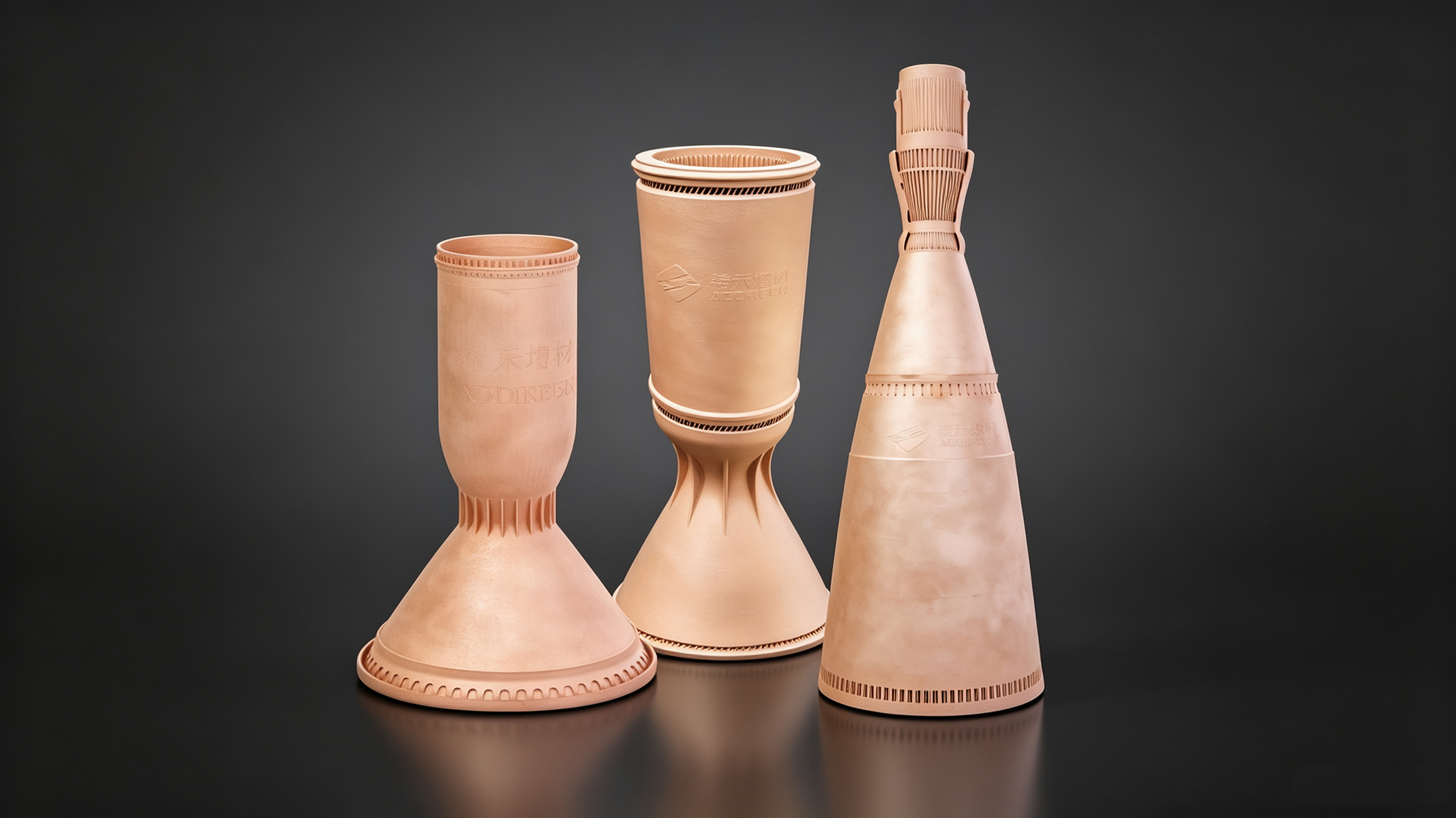
Rocket Thrust Chamber / Combustion Chamber
Material: Pure copper or CuCrZr
Applications: Complex cooling channels and high-performance structural components
From System Selection to Part Delivery
For system evaluation, customers can provide a representative model, target material, expected production volume and acceptance requirements. The technical team will then review the laser configuration, process layer thickness, build layout and auxiliary-system requirements.
For projects requiring manufactured parts rather than equipment, CAD models can be uploaded through the AddireenNow metal 3D printing service platform. Services include manufacturability review, quotation, printing, post-processing and inspection. Material verification, dimensional inspection, surface finishing, machining and functional testing can also be arranged according to project requirements.
System selection: View the XH-M350G-2HR product page
Part manufacturing: Upload a CAD model for a printing quote
Thermal management: Explore additive manufacturing solutions for advanced thermal management