[Case Study] Green-Laser 3D Printing for a Copper DIMM Liquid Cold Plate
A manufacturing case for high-density server memory cooling
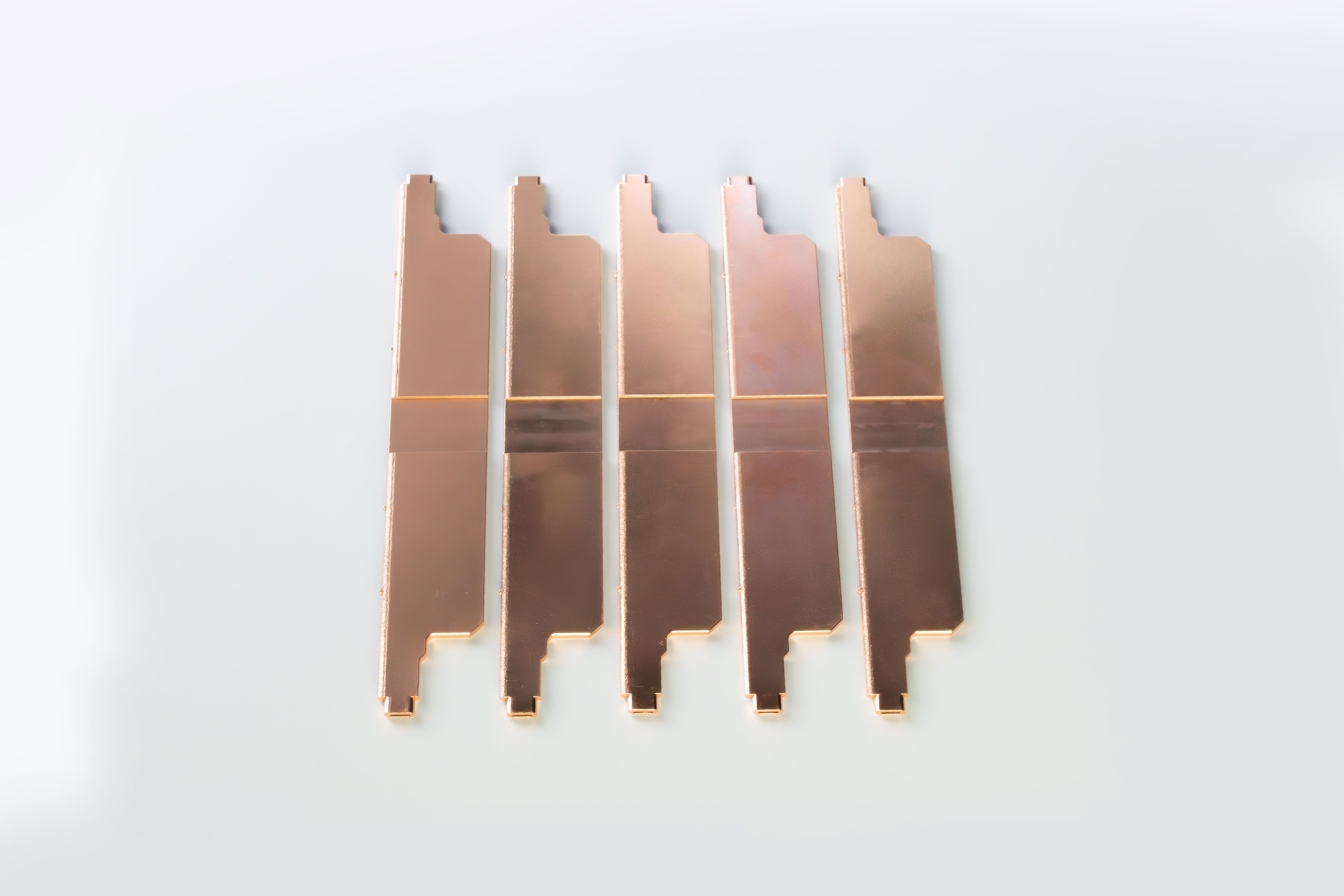
Memory cooling is becoming harder to treat as a secondary issue in high-density servers. When many DIMMs operate in narrow spacing, the thermal path from the memory devices to the coolant must be short, repeatable and compatible with the mechanical envelope of the system. This case examines how a green-laser LPBF was used to produce a copper DIMM liquid cold plate with integrated internal flow channels in a single build.
Why DIMM liquid cooling is being considered
In a conventional server, memory is often cooled by chassis airflow and heat spreaders. As memory power and module count rise, airflow has less room to absorb local thermal peaks and maintain similar temperatures across adjacent modules. A liquid cold plate moves the heat into a controlled coolant loop closer to the source.
Heat must travel from the memory device, through the interface material and cold-plate wall, and then into the coolant. For a simple wall section, conductive thermal resistance follows R = t/(kA), where t is wall thickness, k is thermal conductivity and A is the effective area. A thinner wall can reduce the thermal conduction path, while copper provides high thermal conductivity.
Thin walls also introduce manufacturing constraints. They must remain continuous, flat enough for thermal contact and strong enough for handling and pressure loads. The internal channels must be cleared of powder and inspected. For this reason, minimum wall thickness should be treated as a validated manufacturing result for a defined geometry, not as a universal design rule.
What additive manufacturing changes
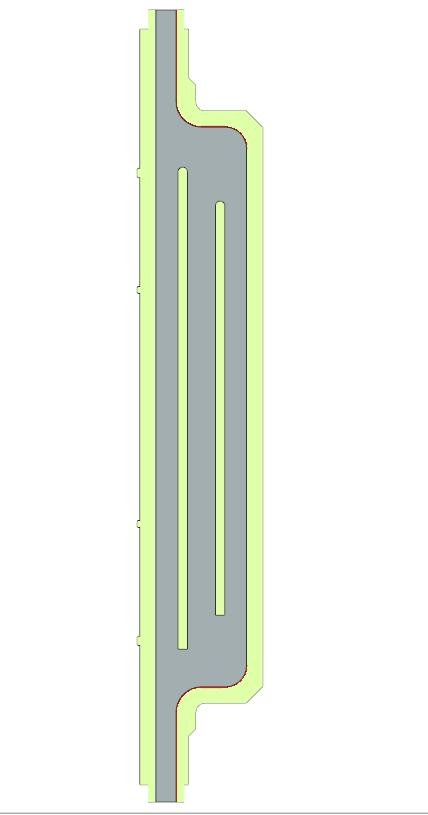
Conventional cold plates are commonly machined from more than one piece and then joined. Laser powder bed fusion can consolidate the outer body and internal coolant passages into one printed part. This can reduce part count and joining interfaces, and it gives the designer more freedom to route coolant around the heat-source area.
Consolidation does not automatically make a part leak-tight or thermally efficient. Porosity, channel roughness, trapped powder, dimensional variation and local flow resistance still have to be controlled. The useful design freedom is the ability to place channels and internal features where they are needed, then verify the result through flow, pressure and thermal testing.
Why use a green laser for copper
Pure copper combines high thermal conductivity with low absorption at the near-infrared wavelengths used by many metal powder-bed systems. Low coupling and rapid heat conduction make melt-pool control more difficult.
A green-laser LPBF produced pure-copper DIMM liquid cold plate up to 99.9% relative density and up to 101% IACS electrical conductivity, while also examining wall thickness and geometrical accuracy.
Project results
The project reports the following figures for the Addireen DIMM liquid cold plate.
|
Reported item |
Project result |
|
Minimum wall thickness |
0.4 mm |
|
Maximum heat-source temperature |
Below 47 °C |
|
Relative density |
Up to 99.9% |
|
Thermal conductivity |
Up to 400 W/(m·K) |
|
Dimensional accuracy |
±0.1 mm |
|
Average print time |
0.75 h per part |
How to interpret the thermal result
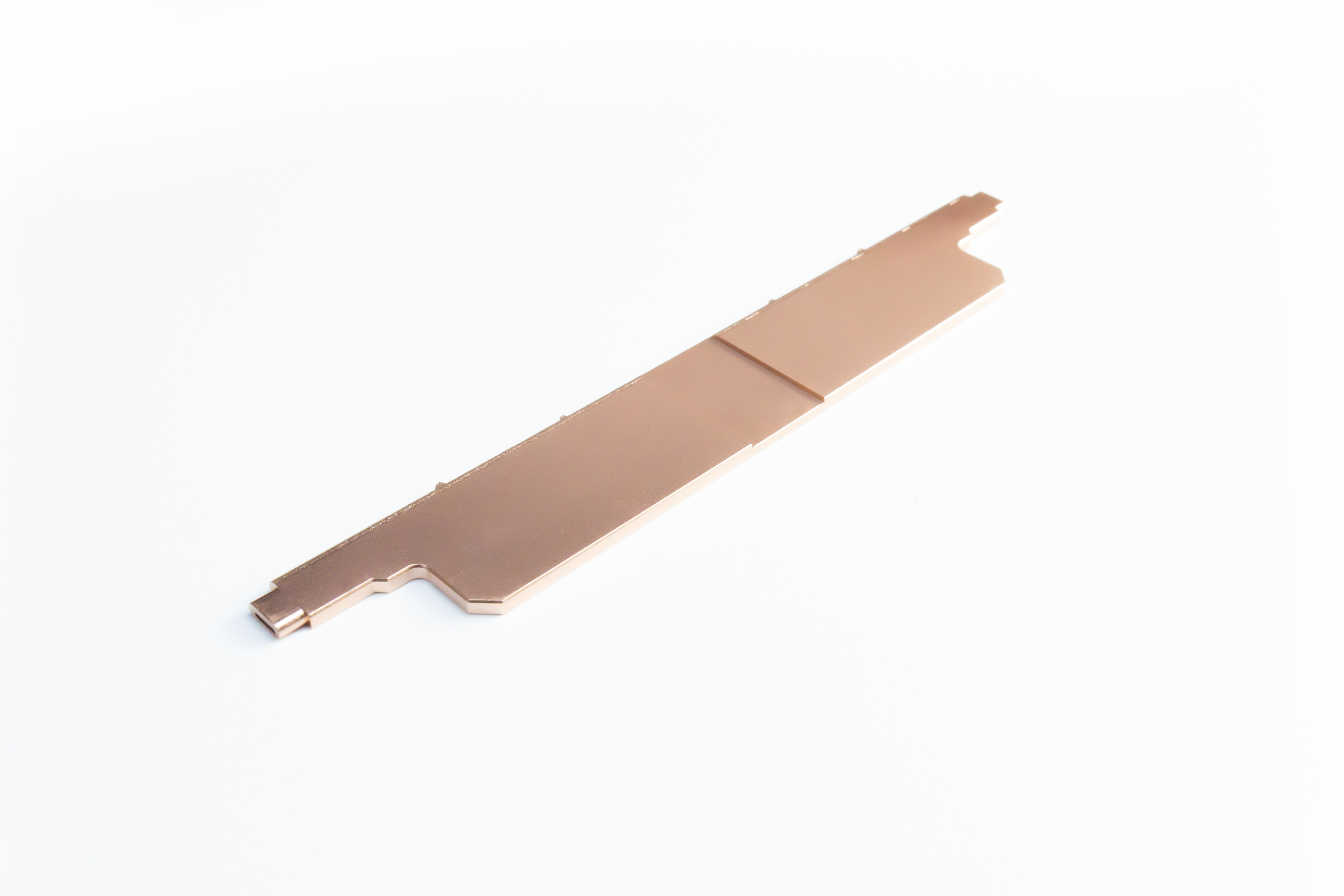
The temperature below 47 °C is useful only with its boundary conditions. Heat load, coolant type, inlet temperature, flow rate, pressure drop, contact pressure, interface material and ambient conditions can all change the result.
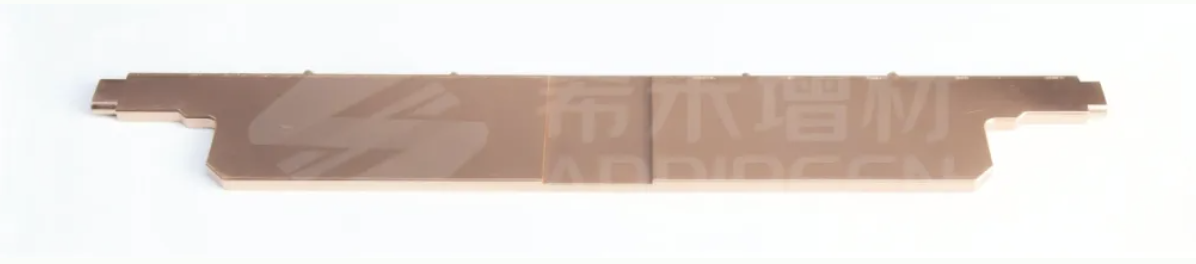
Copper DIMM liquid cold plate
From a printed sample to a production part
A production release needs more than a successful build. The acceptance plan should cover dimensional inspection, density, thermal conductivity, internal cleanliness, coolant compatibility, leak testing, pressure proof, flow resistance and thermal cycling. If the loop contains dissimilar metals, corrosion control and coolant chemistry also need to be addressed.
Post-processing should be defined at the same time as the print specification. Depowdering, channel cleaning, heat treatment, surface finishing and machining can affect channel area, surface condition, and final dimensions.
Where this approach fits
The same manufacturing logic can be considered for other compact thermal-management parts: liquid cold plates for processors and power electronics, copper heat exchangers, busbars with integrated cooling, and components that combine electrical and thermal functions.
Talk to us about a thermal-management part
To review material options and print requirements, visit our Pure Copper 3D Printing material page https://www.addireennow.com/en/pure-copper-cu/82378.html.
For more cold-plate and heat-exchanger examples, see Advanced Thermal Management https://www.addireennow.com/en/industries/advanced-thermal-management/c44da.html.
If you already have a model and operating conditions, use Instant Quote to request a manufacturing assessment https://www.addireennow.com/en/quote.